
Aspec Masculinity... with Patrick Bex
One on One, we discuss being aspec in male-presenting bodies and how masculinity intersects with the experience of being aspec.

In this new series, I’m inviting aspec writers, creatives and activists to join me, one on one, in an email “interview” about an aspec subject that means something to both of us. In this interview, I talk to aspec content creator Patrick Bex, aka Fluently Aspec, about how aspec identity and masculinity intersect in his experience.
Patrick Bex is an aromantic and asexual activist, creator, writer, and educator from Milwaukee, Wisconsin. Beginning in July of 2020, Patrick has used his voice online to raise awareness and understanding of the asexual and aromantic spectrums through his writing and videos on platforms including TikTok, Instagram, and YouTube through his project, Fluently Aspec. Patrick released his first book of poetry, Limitless: Poetry of an Aromantic & Asexual Journey - a memoir in verse traveling through his journey of self-discovery and acceptance. Patrick has gained recognition for asexuality and aromanticism within his state, resulting in Wisconsin formally recognizing Ace Week every year since 2022, as well as Aromantic Spectrum Awareness Week for the first time in 2025. He has also worked with a number of nonprofits such as Courage+ and the Wisconsin LGBTQ History Project in collaborative efforts of increasing visibility.
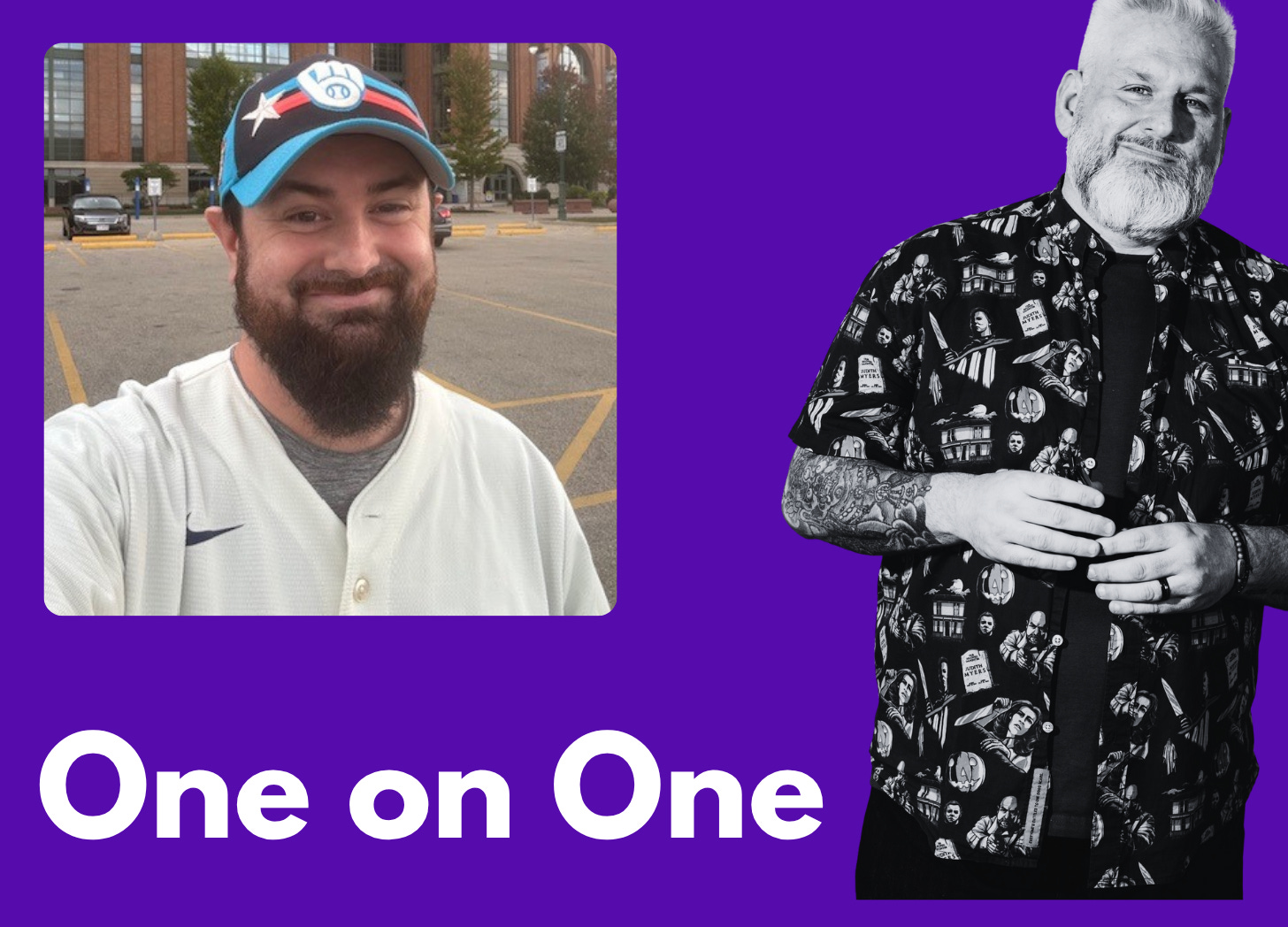
Cody: A subject I don’t see enough about in the aspec community is the ace and aro experiences of of men and folks in male-presenting bodies. Because my formative years were spent in the gay community (I came out as gay at 18, because I was years from learning anything about asexuality), everything having to do with sex was really important to my membership in “the club,” if you know what I mean. And it wasn’t just the performance of sex (which was a constant pressure), but it was also the pressure to “want” it all the time, too. To talk about sex and think about it and make jokes about it – in what felt like a condition for being considered appropriately “gay.” I hated it. I was bad at it. And I still find myself, at almost 50, unpacking the shame and self-hate I built during that period of my life.
I wonder about your experiences with guy friends or male spaces prior to coming out as aspec.
Patrick: That’s actually something I’ve been unpacking a bit lately myself. I’ve realized that in my experience, it came in these scaffolded phases. In high school, it was the “locker room talk” that I mostly assumed was joking around. I still don’t know what was real and what wasn’t. But I was still able to just listen and not let it really affect me at that point.
Once I started college, it was much more “in my face”. My first roommate actually taped sealed condoms to the wall of our dorm room set up in a peace sign that he grabbed from the health center. Every so often, there’d be one missing and later replaced. But still, it wasn’t about me yet - until I was of drinking age. That’s when those nights out at the bars started turning into pressure to go up to strangers and dance with them. I was only there to hang out with my friends, but when your friends just want to find strangers and try to get you to do the same, it quickly became the opposite of what I wanted.
The final phase came right after college - those mid 20’s when our hangouts shifted from the college town to the downtown bars. That’s when it actually became explicit pressure for me to have sex. It was almost like they’d had enough of waiting for me to “catch up” and were going to get me there because to them, they were doing it for me. That ten year span or so went from laughing discomfort to actual nausea. The gaslighting “we’re doing this for you” was the worst part. What I came to realize was it wasn’t even about me - it was they had relationships by that point but still longed for the hook-up culture, so the “wingman” role was their way back in.
Being that I came out as ace right before my 30’s, I feel like those pressures were more abruptly stopped rather than just fading back as I got older. So I’m curious - was there a period where those pressures noticeably shifted for you in either direction? I wonder how much of it is really impacted by those expected life milestones and by social maturity.
Cody: That notion of “catching up” really hits home for me. I felt that into my 40s, and if I’m to be totally honest, I still feel that sometimes today. I’ve been out as ace for 9 years or so, and I still notice myself comparing myself negatively to the gay men in my casual social circles, hearing this nagging little voice saying, “you still have to catch up to them.” I also had friends during my 20s and early 30s who framed their support as helping me “catch up,” and it wasn’t until very much later that I understood that as, while well-intentioned, the opposite of help.
To more directly answer your question: for me, the pressure to conform never really went away entirely. It just changed shape. I got married 11 years ago, and there are expectations within marriage that show up to transform the “get out there and hook up” single life pressures. In my experience of gay culture, there’s also a set of expectations that show up as you get older, into your 40s and beyond, of being “experienced,” of showing you’ve still “got it” by not having sexual desire wane. Gay community mythologizes the “daddy” figure, so that’s the old pressure re-packaged into something new.
I think that’s the insidiousness of sexual norms: they’re so pervasive. They’ve assumed so many different forms as you move through different phases in your life. There are new justifications, new expectations.
Something I’m curious to hear you talk about: has your relationship to masculinity changed since you came out as aroace? I now I experienced some shifts in how I think about masculinity broadly and my own personal relationship to masculinity after coming out as ace. What’s that been like for you?
Patrick: I think what I’ve seen isn’t so much of the pressures stopping, but either they became much more subtle once I came out (some I probably don’t notice - I don’t always pick up on things that aren’t explicit) or in the case of those who couldn’t be kind about it, they’re no longer in my life.
My relationship with masculinity since coming out as aroace really coincided with a lot of the shifts in masculinity that we’ve been seeing these past few years as it is. When I was growing up and in my formative years, I definitely saw the toxic masculinity and knew that wasn’t who I wanted to be, but I was still taught that masculinity comes with responsibilities of adulthood - responsibility to self, to society, to each other - and I never saw them in that order. If anything, I’m the type of person that always put others before myself. But I saw it as having the courage to stand up to bullies and to use your voice and your actions.
I feel like everything I’m seeing now is completely counterproductive to what I actually see as masculinity based on my own beliefs, especially that relationship to adulthood. It’s why I’ve stopped worrying about if others see me as masculine and asked myself what I want it to mean for me. I’ve actually made a few videos where I mention this, but to me, that responsibility to others and society is using your place to stand up for those who aren’t in the position you are to do that alone. It’s helping others up, not blaming them for some fictitious holding back that you feel. At the same time, it’s also pride in who you are - learning strategies to help when people try to tear you down without having to retaliate. It’s also a lot of unlearning - like unlearning that roadmap you thought you were supposed to be on. In terms of my aroace journey, at first, I thought I wasn’t masculine if I was aroace. Then I thought I wasn’t masculine if I struggled with accepting myself. But now I realize what I want my masculinity to be is to allow myself to validate my feelings and open myself up to learn and explore.
A while back, I created a strategy that works for me when someone says something that feels like confrontation. I “shrug”. Sometimes in the literal sense, but really, it’s an acronym. I haven’t actually shared this before, so you’re the first one I’ve passed it along to as I’m still working with it for myself, but it does help me.
Search your feelings - What did this comment make you feel?
Honor those feelings - Remember that your feelings are valid reactions and deserve acknowledgement.
Reflect - Why did this interaction make you feel this way? Is it something deeper?
Unpack - Do I have more to learn about myself? Or do I have more to offer to this person to help them learn?
Grow - Is there an opportunity for growth either for myself or the other person? Or is walking away going to help me grow?
Cody: Okay, I’m sort of obsessed with “SHRUG” as you’ve laid it out. I think it’s a great way to regulate your response to situations. I hope we see a video about it sometime soon.
I come at it from both an aspec and an agender lens, but we have similar journeys around masculinity. The parts of masculinity that I always felt drawn to were the masculine tropes about support, care, uplifting others. I think that’s why the brand is “Ace Dad” and not something else. I connect to masculinity at the places where it’s about support and guidance and nurturing. Like you, I don’t recognize masculinity in the current mode running through a lot of young men today. And I hate that the Right has constructed masculinity to be a weapon of dominance, of apathy, of violence.
I love the form of masculinity you present in the content you make. I think it feels authentic to you, but it also feels like a political statement. Your form of masculinity is kind and gentle without you pretending to be something you’re not. I think it’s an important representation to see, especially for other aspec men.
Okay, one last question: What do you hope more aspec men understood about masculinity, and what do you hope more allo men understood about masculinity?
Patrick: I can definitely do a video on “SHRUG” at some point! Thanks for your kind words. I like to think even for those who don’t know what they can do politically, their very existence is a political statement through living their authentic lives - within safe means of course.
I wish more men understood the difference between standing up and standing up for others. Advocating for yourself is important, but if it comes at the expense of others who have a long history of needing to advocate for themselves for survival when you haven’t? That’s not the courage I grew up believing men should aspire to be. It’s no secret that I am a big fan of comic books and superheroes. Maybe that’s part of why it’s easy for me to put others before myself. But I understand that whether I asked for it or not, I have a privilege, that my voice carries weight without needing as much effort as others. To paraphrase maybe the most iconic line in comics of all time, with great privilege comes great responsibility.
I’ve always rejected the idea that virginity equates to immaturity and the concept of “becoming a man” with sex as the gates. I’ve known plenty of people over the years who frankly disprove that theory. Sex doesn’t grant maturity. Nor does misogyny, bigotry, racism, queerphobia, transphobia, xenophobia - those are all signs of fear, selfishness, and immaturity. What I hope aspec men understand about masculinity is what I learned from some unconventional models growing up in the pages of those comics or on Power Rangers after school. To be a man is to look out for others, to lend a platform for their voices to be heard. To believe in the power of your voice. To believe in the authenticity of you. To believe that you never stop learning, even if you’ve spent a lifetime teaching.
As for allo men, I hope more of them understand the power of kindness and respect. I’ve always taken issue with the phrase “respect is earned”. An 8th grader said that to me in my first year as an educator, and I remember it sticking with me the entire day. That first year, I came in and took an open position after a well-liked teacher moved on to another school. The 8th graders had been looking forward to having her that year as well, and when they got me instead - a first-year teacher with very shaky classroom management skills because those aren’t taught at college - they instantly rejected me. And this is what I came to realize when he told me that respect is supposed to be earned.
I did nothing wrong. A job was open, I needed one, I interviewed, and I was hired. In life, we all make choices, we make mistakes. Some own up to those mistakes, some hope if they ignore them long enough that they just get forgotten, and some double down. But that’s where respect comes from. That we learn, that we adjust, that we listen, and if we misunderstand, make a mistake, or our actions and words hurt someone, that we own up to it and take responsibility to learn and do better. I made mistakes in that first teaching job as every teacher does. But I was trying my best, I would apologize, I would reflect, and I would try to do even better.
From that moment on, I understood that respect is not earned. Respect is and always should be given to anyone. But it can be unearned. It can grow, it can diminish, it can be wiped away entirely by the choices one makes. Choices - not truths of our lived experiences like gender, sexuality, romantic orientation, race, nationality, ethnicity. Choices reveal a person in a different light - and that is the light by which respect blooms or wilts.
If you want to support Patrick and Fluently Aspec, you can visit his website, check out his YouTube channel or find other ways to connect at his Linktree.

Would you be up for doing an Aspec Femininity article too?
So interesting to read, I love Patrick’s content (and book 💜💚)! And the last part about respect being able to be unearned: hit the nail right on the head.